Sustainable Foraging Ethics
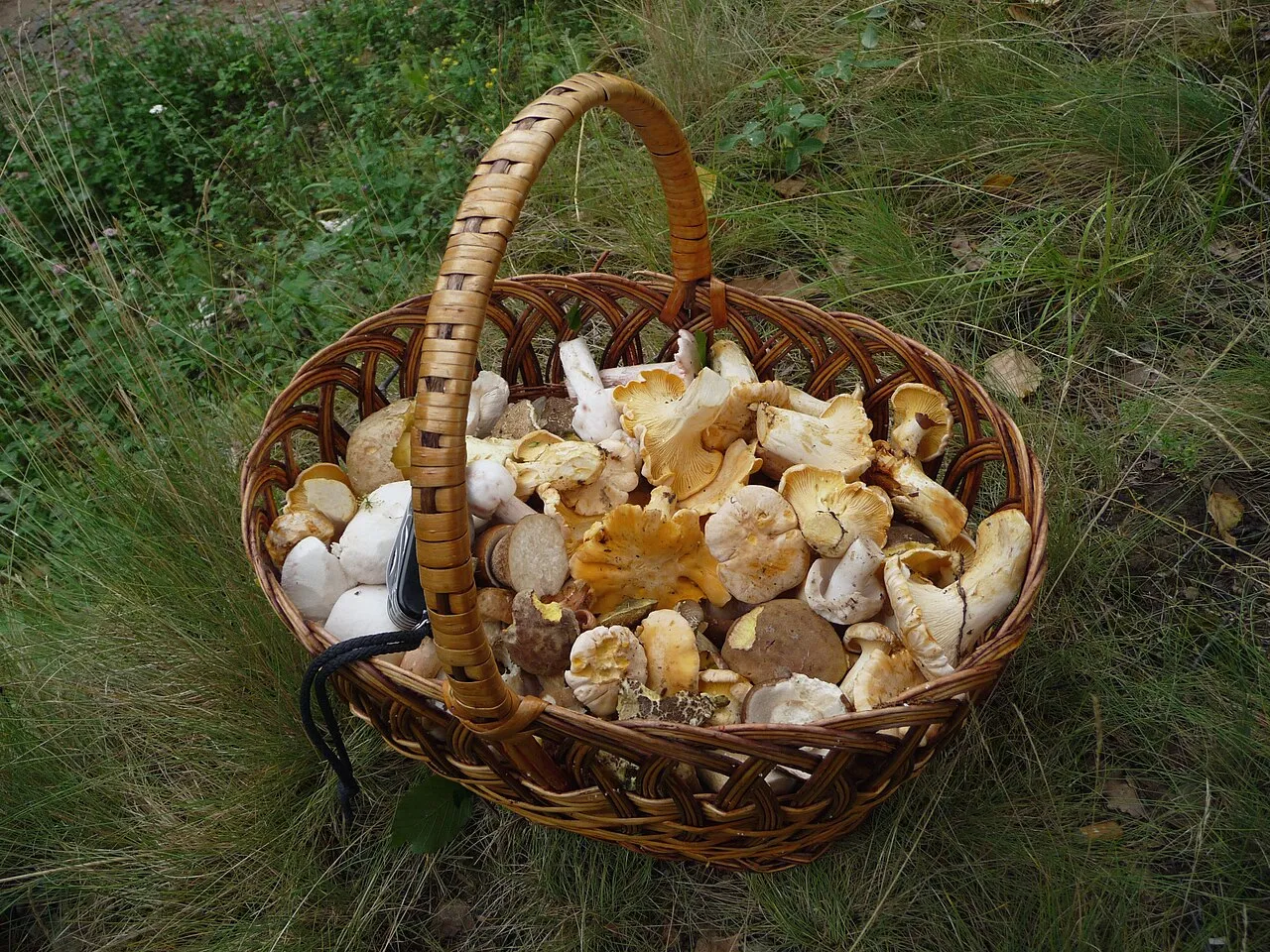
Principles of Sustainable Foraging
Take only what you need
- Don’t collect beyond your reasonable needs
- Harvest no more than one third of the fruiting bodies from any one spot — leave the rest for spore dispersal
- Leave young specimens with closed caps — they haven’t released their spores yet
- Prefer mature mushrooms with open caps — they have already dispersed some of their spores
Leave the forest as you found it
A Portuguese tradition: “deixar a floresta como a encontrou” (leave the forest as you found it).
- Don’t disturb the leaf litter (caruma, folhada) — it protects the mycelium
- Never use rakes or hoes — banned by all official guidelines (DGADR, ICNF)
- Walk on existing paths — minimise trampling
- Don’t destroy dead wood — saprotrophic fungi depend on it
Cut or Pull?
This classic debate among foragers has been settled by science.
Swiss study (33 years of observations):
- Systematic harvesting does not reduce future yields or species diversity — regardless of method (cutting or pulling)
- Plots where mushrooms were pulled showed even slightly higher productivity than controls
- Trampling is the real problem: it reduces fruiting body numbers by ~30%
Practical recommendations:
- For identification: dig up the whole mushroom (including the base) — to see the volva in Amanita
- For minimal impact: cut with a knife — less soil disturbance
- The main thing — don’t trample the mycelium: don’t stand in one spot
Impact of Over-Harvesting
Ecological consequences
Fungi are a key link in the ecosystem:
- Mycorrhizal fungi provide nutrition to trees
- Saprotrophs decompose organic matter and return nutrients to the soil
- Changes in fungal populations affect food chains and nutrient cycling
The situation in Portugal
Quercus (Portugal’s largest environmental organisation) warns that uncontrolled mushroom harvesting threatens the populations of certain species. A significant proportion of collected mushrooms is exported to Italy, France and Spain.
The real threat is not so much the harvesting of fruiting bodies itself, but the collateral damage:
- Trampling of leaf litter
- Destruction of the soil layer
- Use of rakes and hoes
Portuguese Guidelines and Standards
“Manual de Boas Práticas” (DGADR)
Published by DGADR together with ICNF under the project “Promover os Recursos Micológicos”. Key rules:
- Do not use tools that remove the surface layer of soil
- Do not collect mushrooms with closed caps — let them release their spores
- Avoid collecting in polluted zones (near roads, industrial sites, farms)
- Return mushroom trimmings to the forest
- Use wicker baskets — not plastic bags
- Keep one specimen of each species in case of poisoning
More: Forager’s equipment
CCRES
Centro de Competências dos Recursos Silvestres publishes detailed guidelines at ccres.pt.
Educational Programmes
| Organisation | Activities |
|---|---|
| A Pantorra (Mogadouro, Trás-os-Montes) | Mycological excursions, gastronomic weeks, school outreach |
| EcoFungos (Seixal) | Educational events on mycology and ecology |
| Fungiperfect | Mycology and forestry training |
| ICNF | Professional courses: UFCD 6359 (collectors) and UFCD 6358 (commercialisation) |
| Quercus | “Introdução à Identificação de Cogumelos Silvestres” courses |
| LPN | “Curso básico de identificação de cogumelos silvestres” |
Habitat Protection
- Don’t disturb the leaf litter — mycelium lives in the top centimetres of soil
- Walk on paths — trampling reduces yields by 30% (proven fact)
- Don’t collect in polluted zones — mushrooms accumulate heavy metals and toxins
- Don’t destroy dead wood — saprotrophic fungi depend on their substrate
The Ethics of Mushroom Spots
Foragers worldwide are reluctant to share the coordinates of their productive spots. This is a reasonable practice:
- Share general knowledge — habitat types, seasons, species
- Don’t reveal exact coordinates — especially online
- Teach people how to look, not where — this is the sustainable approach
Climate and the Future
Climate change is affecting fungi across Europe:
- The fruiting season is lengthening — mushrooms start fruiting earlier and finish later
- Mediterranean saprotrophs and pine mycorrhizal fungi are delaying autumn fruiting by 19–32 days due to extended summer drought
- For Portugal, increasing drought poses a particular risk to mycorrhizal networks in montado and pine forests
European Standards
European Charter on Fungi-Gathering and Biodiversity (2013)
Recommendation No. 168 of the Council of Europe:
- Recognises sustainable mushroom foraging as a legitimate use of resources
- Defines principles of sustainable harvesting
- Developed with the participation of ECCF (European Council for Conservation of Fungi) and IUCN
The “Fauna Flora Funga” Initiative
Promotes equal legal status for fungi alongside animals and plants. Fungi are too often overlooked in conservation legislation.
Image sources
- sustainable-foraging.webp — Basket of edible fungi — sustainable foraging. Author: George Chernilevsky. License: CC BY-SA 3.0. Source
Sources
- DGADR — Manual de Boas Práticas de Colheita e Consumo de Cogumelos Silvestres
- CCRES — Boas Práticas de Recolha (ccres.pt)
- Quercus — “Apelo à regulamentação da produção, recoleção e comercialização de cogumelos silvestres” (2021)
- Egli et al. — “Mushroom picking does not impair future harvests” (Conservation Biology, 2006)
- Kauserud et al. — “Warming-induced shift in European mushroom fruiting phenology” (PNAS, 2012)
- Council of Europe — Recommendation No. 168 (2013): European Charter on Fungi-Gathering and Biodiversity
- ECCF — Guidance for Conservation of Macrofungi in Europe
The light is on for free. But someone has to clean the lantern.
☕ Support on Ko-fi