Mushrooms in Portuguese Cuisine
Mycophobia and Mycophilia
Portugal has a dual relationship with mushrooms. The prevailing attitude is mycophobia (fear of mushrooms), inherited from centuries of tradition. However, in certain regions — primarily Trás-os-Montes and Beira Interior — a deep mycophilic tradition survives: empirical knowledge of species, foraging, and cooking passed down through generations.
Geographically, this creates a stark contrast:
- North and centre (Trás-os-Montes, Beira) — mushrooms are deeply integrated into local gastronomy
- South (Alentejo) — tradition is limited to a few species (silarca, túbera)
- Coast and major cities — until recently, mushrooms were virtually absent from culinary culture
Regional Traditions
Trás-os-Montes: the heart of mushroom culture
Portugal’s most mycophilic region. Here, mushrooms are not a delicacy but everyday food in season.
Key species:
- Míscaros (yellow knight) — the iconic mushroom of the region, lending its name to Portugal’s largest mushroom festival
- Rapazinhos — local name for chanterelles in the Chaves area
- Tortulhos — porcini
- Pinheira — Caesar’s mushroom
- Sancha/Cardela — saffron milk cap
Traditional dishes:
- Míscaros grelhados — grilled over charcoal with olive oil and garlic
- Míscaros com ovos — sautéed mushrooms with scrambled eggs
- Javali com cogumelos — wild boar stew with mushrooms (autumn–winter)
- Arroz de cogumelos — mushroom rice (Portuguese-style risotto)
Beira Interior: the land of míscaros
- Festival Míscaros in Alcaide (Fundão) — Portugal’s largest mycological event
- Míscaros are virtually the only wild mushroom known and collected by local communities
- Traditional serving: grilled with salt, with eggs, or in rice
Alentejo: silarca and túbera
Unique southern species:
- Silarca (Amanita ponderosa) — “the jewel of the montado”, season February–April
- Túbera/Criadilha (Terfezia arenaria) — “desert truffle”, season March–April
Iconic dish:
Silarcas com ovos — scrambled eggs with silarcas. Clean the mushrooms, cut into strips, sauté with garlic in olive oil, pour in beaten eggs. As the Alentejo saying goes: “Silarcas die grilled with salt” (“silarcas morrem grelhadas com sal”).
Other traditional recipes:
- Silarcas grelhadas — grilled with coarse salt
- Calducho — broth with pennyroyal (poejo) and bread, with mushrooms
- Feijão com silarcas — beans with silarcas
- Ensopado de borrego com silarcas — lamb stew with silarcas
Túberas:
- Túberas com ovos mexidos — scrambled eggs with túberas
- Peel, slice like potatoes, sauté in olive oil with black pepper, add eggs
Basic Cooking Methods
Grilled mushrooms (cogumelos grelhados)
The most common traditional method in Portugal:
- Clean mushrooms, remove stems
- Distribute chopped garlic over the caps
- Season with fine salt, drizzle with olive oil
- Place on a preheated grill
- As they cook, mushrooms release juice, creating a sauce inside the cap
- Serve with parsley or coriander
Best species for grilling: porcini, Caesar’s mushroom, silarca, portobello
Sautéed mushrooms (cogumelos salteados)
- Slice mushrooms, sauté in olive oil with garlic
- Season with salt, pepper, and lemon juice
- Finish with parsley or coriander
- Serve as a starter or side dish
Mushroom rice (arroz de cogumelos)
The Portuguese version of risotto:
- Sauté onion and garlic in olive oil
- Add sliced mushrooms, cook until golden
- Add rice, pour in stock
- Cook until the rice is creamy (arroz malandro — “soupy rice”)
Eggs with mushrooms (ovos com cogumelos)
A universal recipe that varies by region:
- Sauté mushrooms with garlic
- Pour in beaten eggs
- Stir gently to scramble
Culinary Names of Mushrooms
The same species can have completely different names in different regions:
| Scientific name | Trás-os-Montes | Beira | Alentejo | Standard Portuguese |
|---|---|---|---|---|
| Cantharellus cibarius | Rapazinho | Cantarelo | — | Cantarelo |
| Boletus edulis | Tortulho | Tortulho | — | Boleto, Porcini |
| Amanita caesarea | Pinheira | — | — | Amanita dos césares |
| Lactarius deliciosus | Sancha, Cardela | Níscaro | — | Sanca |
| Tricholoma equestre | — | Míscaro | — | Míscaro amarelo |
| Amanita ponderosa | — | — | Silarca, Selerca | Silarca |
| Terfezia arenaria | — | Criadilha | Túbera | Túbera |
| Macrolepiota procera | — | Frade | — | Roque, Frade |
| Pleurotus ostreatus | — | — | — | Pleuroto, Ostra |
Mushrooms and Wine
Traditional pairings:
- Grilled porcini → red Dão or Douro wine
- Silarcas with eggs → white Alentejo wine
- Truffles → aged red Alentejo or tawny port
- Chanterelles → young red Minho (Vinho Verde tinto)
Mushrooms in Fine Dining
In recent years, mushrooms have increasingly appeared on fine dining menus:
- Silarcas — have become a “trendy” ingredient in spring tasting menus
- Wild porcini — used in autumn seasonal menus
- Truffles — appeared on top restaurant tables after the discovery of Tuber aestivum in Portugal (2024)
More: Restaurants and mushroom menus
Kitchen Safety
- Cook mushrooms on the day of collection or refrigerate for no more than 24 hours
- Do not reheat mushroom dishes
- Keep a sample of each species in case of poisoning — ASAE recommendation
- More: Preservation and storage
Image sources
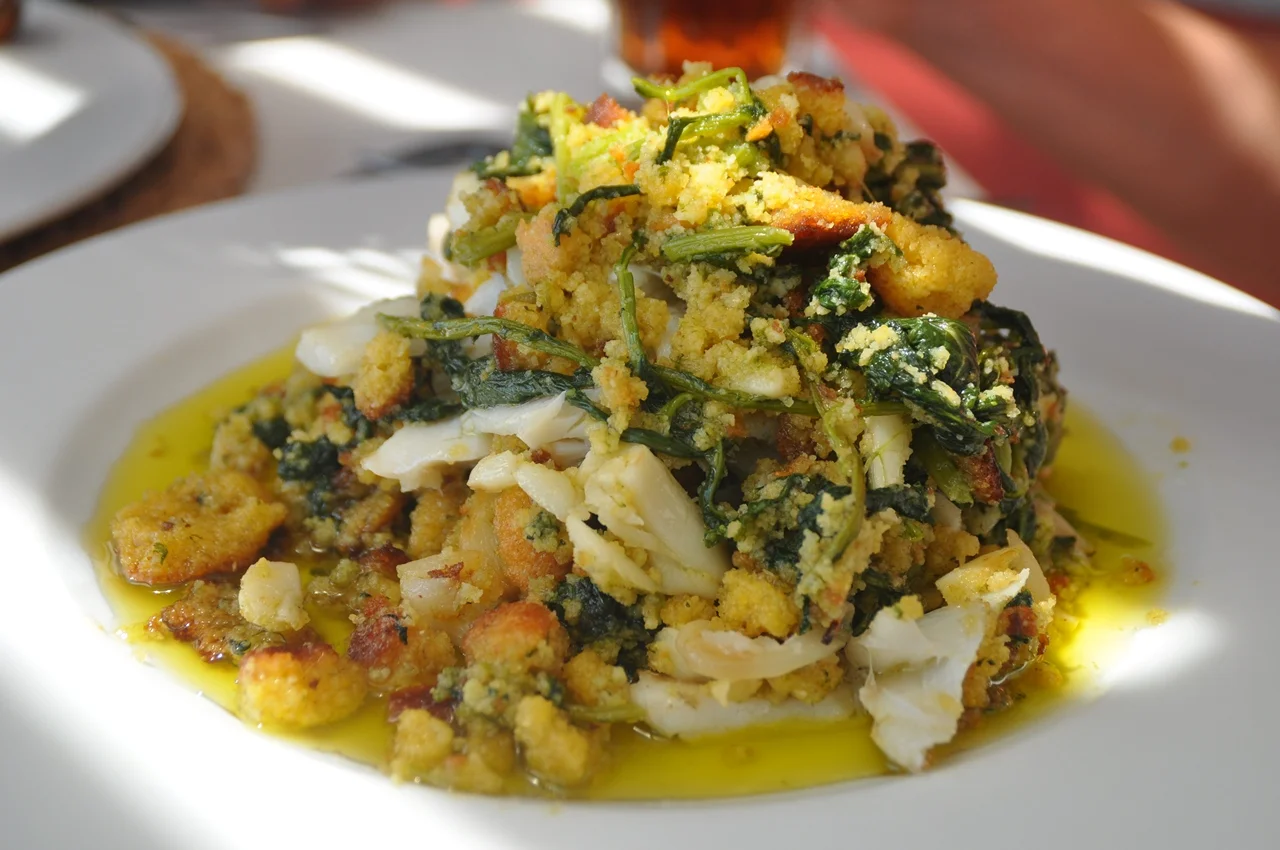
- portuguese-cuisine.webp — Portuguese cuisine — traditional bacalhau dish. Author: silvar.net. License: CC BY 2.0. Source
Sources
- DGADR — Produtos Tradicionais Portugueses: Cogumelos Silvestres
- CCRES — Cogumelos Silvestres
- AlentejoTurismo.pt — Silarca ou tortulho (Amanita ponderosa)
- Jornal de Negócios — Cogumelos do Alentejo: segredos da terra na mesa
- Clube de Vinhos Portugueses — Sabores de Portugal: Míscaros
- ASAE — Consumo de Cogumelos Silvestres
The light is on for free. But someone has to clean the lantern.
☕ Support on Ko-fi