Portuguese Truffles
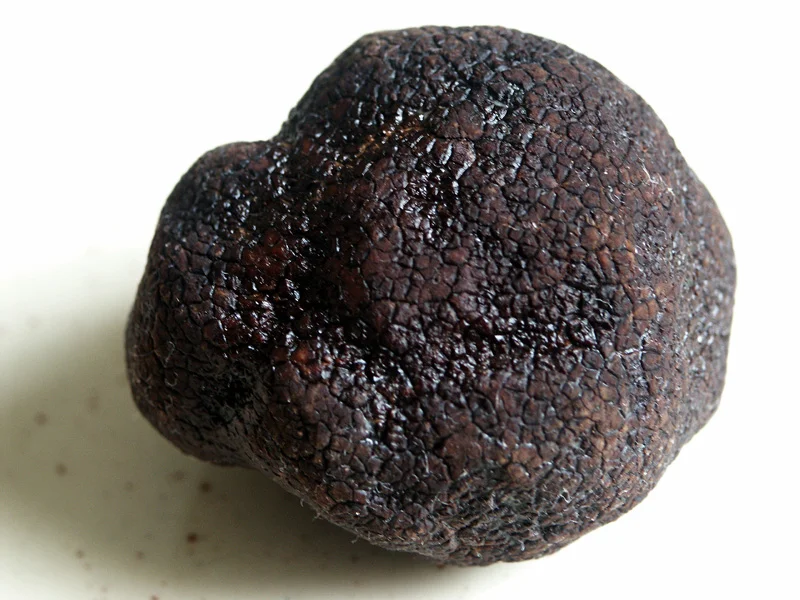
Truffles in Portugal: Overview
Portugal is a country with two truffle traditions that have long existed in parallel:
- Folk tradition — foraging for túberas (Terfezia spp., “desert truffles”) in the Alentejo and Beira Baixa, practised for centuries
- New industry — cultivation of true truffles (Tuber spp.), developing since the 2010s
Túberas (Terfezia): the folk tradition
What are túberas?
Túberas (also criadilha, criadinha, batatinha) are underground (hypogeous) fungi of the genus Terfezia, growing in symbiosis with the roots of rockrose (Cistus spp.). They are not true truffles of the genus Tuber, although both are underground fungi.
Species in Portugal:
- Terfezia arenaria — the most common, on sandy acidic soils
- Terfezia lusitanica — endemic, described by researchers at the University of Évora
- Terfezia solaris-libera — another new species discovered by Celeste Santos-Silva’s team
Where and When
- Regions: Alentejo, Beira Baixa, some parts of Ribatejo
- Season: February–May (peak: March–April)
- Habitat: sandy acidic soils under rockrose (Cistus ladanifer, C. salviifolius)
- Indicator plant: Tuberaria guttata — an annual with yellow flowers and bordeaux spots at the base of the petals, indicating the presence of túberas
Foraging
Traditional method:
- Look for cracks in the soil around rockrose bushes
- Use a pointed stick (pau pontiagudo) or small hoe
- Depth: 5–15 cm
- Mature túberas — walnut to fist-sized
Cuisine
- Túberas com ovos mexidos — the main dish: scrambled eggs with túberas
- Peel, slice like potatoes, sauté in olive oil with black pepper, add eggs
- Flavour is mild, earthy, less intense than Tuber melanosporum
- Price: significantly lower than true truffles (5–30 EUR/kg)
Research
The team of Professor Celeste Santos-Silva (University of Évora):
- Described 2 new species for science: T. lusitanica and T. solaris-libera
- Developed technology for isolating and maintaining Terfezia mycelium in pure culture
- Project “Micorrização de Cistus spp. com Terfezia arenaria” — mycorrhization of rockrose for commercial túbera production
True Truffles (Tuber)
Species Found in Portugal
| Species | Portuguese | Season | Status |
|---|---|---|---|
| Tuber melanosporum | Trufa negra de Inverno | Dec–Feb | Cultivated |
| Tuber aestivum | Trufa negra de Verão | May–Sep | Found wild (2024) |
| Tuber borchii | Trufa branca | — | Under research |
The 2024 Discovery
In May 2024, chef Tanka Sapkota and his team for the first time in Portugal’s history discovered and certified summer truffle (Tuber aestivum) in the wild:
- Location: Alenquer and Sobral de Monte Agraço (Lisbon district)
- Under holm oaks (Quercus ilex)
- Found with the help of truffle dog Pina and Italian truffle hunter Giovanni Longo (Piedmont)
- Scientific confirmation: molecular (DNA) analysis
- Quantity found: approximately 15 kg
- One specimen was discovered by 12-year-old João Pedro Pereira
Trufficulture
What is trufficulture?
Trufficulture (truficultura) is the cultivation of truffles by planting trees pre-inoculated (mycorrhized) with truffle spores. The first harvest comes 5–10 years after planting.
Companies in Portugal
| Company | Region | Specialisation |
|---|---|---|
| Algarve Truffles | Monchique, Algarve | First professional plantation (since 2010), consulting |
| Truffer Serra | — | 20+ years experience, mycorrhized seedlings, truffles |
| Aromas & Boletos | — | Laboratory, mycorrhized trees, products |
| Mycotrend | — | Mycorrhized oak and hazelnut seedlings (since 2012) |
Suitable Regions
Tuber melanosporum requires alkaline calcareous soils (pH 7.5–8.5). Portugal’s soils are predominantly acidic, but limestone zones exist:
- Serra de Aire and Candeeiros — the country’s largest limestone deposits
- Serra de Sicó — potential for commercial trufficulture
- Alentejo — selected zones with suitable soils
- Algarve (Serra de Monchique) — Algarve Truffles projects
- Trás-os-Montes and Beira Interior — dry, hot climate with suitable patches
Technology
- Host trees: holm oak (Quercus ilex), cork oak (Q. suber), hazelnut (Corylus avellana)
- Density: 300–800 trees/ha
- Mycorrhization: inoculation of roots with truffle spores at the nursery stage
- Aromas & Boletos offers technology boosting yields by 20–30 kg truffles/ha
- Truffle dogs: training takes 1–2 years; breeds used include Lagotto Romagnolo and local crossbreeds
Economic Potential
- Price of T. melanosporum: 1,000–2,000 EUR/kg
- Price of T. aestivum: 100–400 EUR/kg
- Price of túberas (Terfezia): 5–30 EUR/kg
- European context: Spain and France lead in trufficulture; Portugal is at an early stage but with growing potential
Where to Buy
- Aromas & Boletos (boletosdeorum.pt) — fresh truffles and truffle products
- Truffer Serra (truffer-serra.com) — mycorrhized seedlings and truffles
- Mushroom markets and festivals (season: November–February)
- More: Mushroom markets
Image sources
- truffles-portugal.webp — Black truffle (Tuber melanosporum) — the ‘black diamond’ of cuisine. Author: Wikimedia Commons. License: Public domain. Source
Sources
- The Portugal News — Truffles “better than those found in Italy” discovered in Portugal (2024)
- Diário de Notícias — Uma descoberta de Tanka Sapkota: há trufa negra em solo português
- NIT — Tanka Sapkota: “Quando descobri trufas em Portugal concretizei um sonho”
- Voz de Alenquer — Primeiras trufas negras em Portugal descobertas em Alenquer
- Algarve Truffles — algarve-truffles.com
- Truffer Serra — truffer-serra.com
- Aromas & Boletos — boletosdeorum.pt
- Universidade de Évora — Celeste Santos-Silva, Terfezia lusitanica sp. nov.
- Jornal de Leiria — Serras de Sicó e de Aire e Candeeiros podem esconder trufas
If this article was useful — help us write the next one.
☕ Support on Ko-fi