Meadows and Pastures
Description
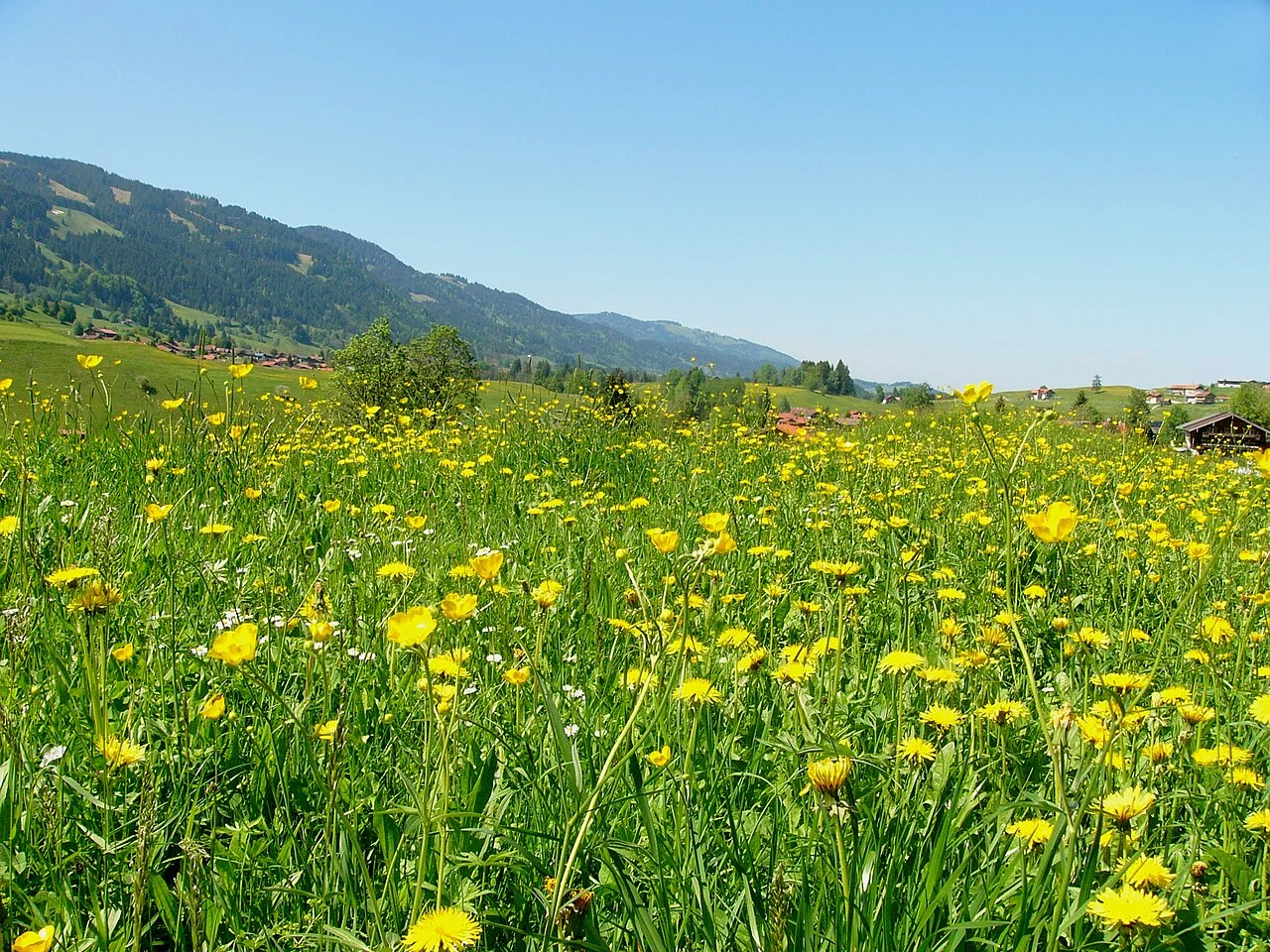
Meadows and pastures are open habitats where saprotrophic fungi dominate. Unlike forest ecosystems, there are no tree partners for mycorrhiza, so fungi feed on decomposing organic matter: fallen leaves, dung and plant debris.
In Portugal, several types can be distinguished:
- Pastures (pastagens) — cultivated and semi-cultivated grazing lands, most extensive in the Alentejo and Trás-os-Montes
- Semi-natural meadows (prados seminaturais) — including meadows on limestone (Natura 2000 habitat type)
- Lameiros — unique irrigated mountain pastures of north-eastern Portugal
Geographic distribution
- Alentejo — extensive livestock pastures within the montado system (grassland + scattered oaks)
- Trás-os-Montes — mountain pastures, lameiros
- Beira Interior — semi-natural meadows, transition zone
- Centre (Serra de Aire e Candeeiros) — semi-natural dry grasslands on limestone
Lameiros — a unique habitat type
Lameiros are irrigated semi-natural mountain pastures with a centuries-old history. Located above 700–800 m, near watercourses, in Trás-os-Montes, Beira Interior and Entre-Douro-e-Minho. An ancient canal system provides a thin water layer over the surface; in winter this protects against frost. Lameiros support the largest cattle herds in the region.
Characteristic mushrooms
Edible species
| Species | Portuguese name | Season |
|---|---|---|
| Field mushroom (Agaricus campestris) | Rosa-dos-prados | Autumn, also spring |
| Agaricus arvensis | Cogumelo-do-campo | Spring and autumn |
| Parasol mushroom (Macrolepiota procera) | Frade, roca | Late summer–autumn |
| Shaggy ink cap (Coprinus comatus) | Coprino-barbudo | Autumn, also spring and winter |
| Marasmius oreades | — | Spring–autumn after rain |
| Lycoperdon perlatum | Bufa-de-velha | Spring and autumn |
King oyster mushroom
Pleurotus eryngii (cogumelo-do-cardo, repolga-dos-cardos) grows on the roots of field eryngo (Eryngium campestre). Prefers fallow land, pastures, roadsides, sunny slopes on calcareous soils. One of the most prized meadow mushrooms of the Mediterranean.
Fairy rings
Marasmius oreades (fairy ring mushroom) forms characteristic fairy rings on lawns and pastures. It has a unique ability to dry out and revive after rain. Season: spring–autumn after rain.
Dangerous look-alikes
- Livid pinkgill (Entoloma sinuatum) — young specimens can be confused with St George’s mushroom (Calocybe gambosa)
Meadow ecology: saprotrophs vs. mycorrhiza
Meadows and pastures are dominated by saprotrophic fungi:
- Nitrophilic species (Agaricus campestris, A. arvensis) favour well-manured pastures
- Livestock dung enriches the soil with nitrogen — the main “fertiliser” for meadow fungi
- Many saprotrophs form fairy rings
- In pure grassland (without trees), mycorrhizal fungi are virtually absent
- At forest edges and in the montado system (grassland + scattered oaks), ectomycorrhizal species may occur under isolated trees
Impact of grazing regime
- Moderate grazing enriches soil with nitrogen through dung — attracts fungi
- Trampling maintains open grassland structure, preventing scrub encroachment
- Centuries-old grazing without ploughing creates conditions for indicator species (waxcaps Hygrocybe)
- Application of mineral fertilisers rapidly destroys waxcap populations
Seasonality
| Season | Months | Main species |
|---|---|---|
| Spring | March–May | Agaricus arvensis, Marasmius oreades, Pleurotus eryngii |
| Summer | June–August | Dormancy (drought); mycelium survives in soil |
| Autumn (main) | September–November | Agaricus campestris, Macrolepiota procera, Coprinus comatus, Lycoperdon perlatum |
| Winter | December–February | Coprinus comatus (on irrigated meadows) |
Mediterranean feature: summer dormancy (June–September) due to drought. Fruiting begins after heavy rain (5+ mm over several days), at temperatures of 10–20°C.
Practical tips
- Livestock pastures — the best places for field mushrooms: look on well-manured grassland
- Roadsides, parks, lawns — Coprinus comatus and Agaricus campestris grow in urban settings too
- Forest edges and transition zones — where meadow meets woodland — the most diverse areas
- Always check your mushrooms: cut the stipe base — if it turns yellow and smells chemical, it is the poisonous A. xanthodermus
- Lameiros (Trás-os-Montes) — irrigated meadows with centuries of history, potentially interesting for foragers
Image sources
- meadows-pastures.webp — Flowering meadow — habitat of grassland mushrooms. Author: Nikater. License: Public domain. Source
Sources
- Naturdata — Agaricus campestris (naturdata.com)
- Museu Virtual Biodiversidade — Universidade de Évora
- CCRES — Cogumelos silvestres em Portugal
- Universidade do Porto — Pastagens Seminaturais de Montanha
- Scielo — Pastagens permanentes em Portugal
- ICNF — Prados secos seminaturais (Natura 2000)
If this article was useful — help us write the next one.
☕ Support on Ko-fi