Pine Forests of Tróia and Sand Dunes
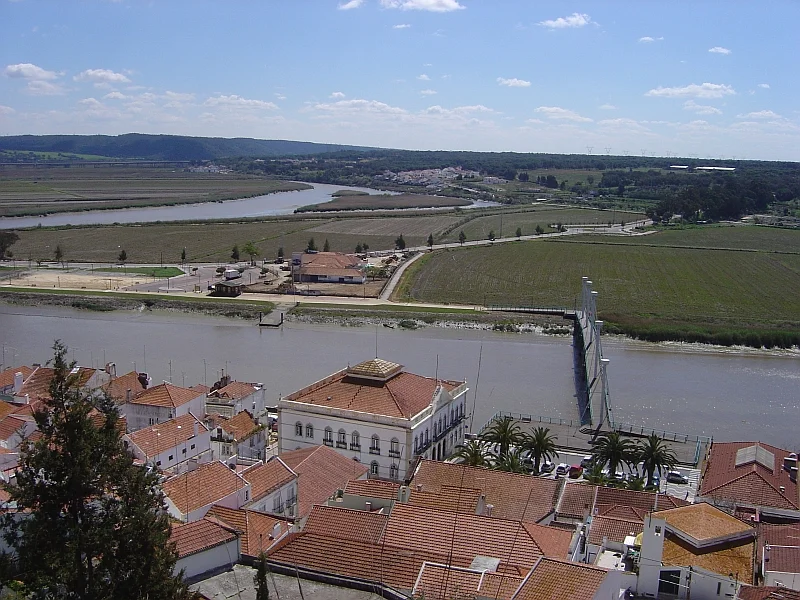
The sandy antipode of Arrábida
If Arrábida is limestone and alkalinity, then the Tróia Peninsula and the Setúbal coastline are sand and acidity. Two worlds, a ferry ride apart.
The sandy Tróia Peninsula stretches as a narrow spit between the Atlantic Ocean and the Sado Estuary. Here, pine forests on acidic sandy soils dominate — an entirely different ecosystem, with entirely different mushrooms.
Two pine species — two forest types
Stone pine (Pinus pinea) — pinheiro-manso
The Italian stone pine (umbrella pine) — a tree with a distinctive flat crown. It produces large cones with pine nuts (pinhões). In Portugal, stone pine is an important crop: the country produces ~50% of the world’s pine nuts.
Stone pine prefers deep sandy soils and tolerates drought well. Its roots form ectomycorrhizae with fungi of the genera Suillus, Lactarius, Amanita, Hebeloma, Laccaria, Pisolithus, Rhizopogon, Scleroderma.
Maritime pine (Pinus pinaster) — pinheiro-bravo
Portugal’s most common tree. Hardier and more resilient than stone pine. Grows on poor acidic soils, including dunes. Molecular studies (2013) identified at least 8 genera of ectomycorrhizal fungi on Pinus pinaster roots.
Characteristic mushrooms
Edible species
| Species | Portuguese name | Season | Notes |
|---|---|---|---|
| Saffron milk cap (Lactarius deliciosus) | Sancha, míscaro | Autumn–winter | Exclusively with pines; Portugal’s most popular mushroom |
| Suillus collinitus | Boleto-viscoso | Autumn | Typical for pine forests on sand |
| Suillus granulatus | Boleto-granuloso | Autumn | Common in young pine plantations |
| Slippery jack (Suillus luteus) | Boleto-anelado | Autumn | In pine forests on acid soils |
| Boletus pinophilus | Boleto-dos-pinheiros | Autumn | Mycorrhizal with P. pinaster and P. pinea |
| Parasol mushroom (Macrolepiota procera) | Frade | Autumn–winter | On edges and clearings |
Dune fungi
Sand dunes are a harsh environment, but this is precisely where fungi play a critical ecological role: mycorrhizal networks stabilise dune vegetation.
Key species:
- Pisolithus arhizus (P. tinctorius) — a large subterranean fungus, the most important partner of Pinus pinaster in dune ecosystems. Pisolithus inoculation significantly improves pine seedling survival on dunes
- Rhizopogon spp. — underground fungi associated with pines
- Scleroderma spp. — earthballs that form mycorrhizae with pines on sand
The Atlantic dune pine forests of the Setúbal coast belong to the endemic Iberian alliance Coremato albi-Pinion pinastri.
Dangerous species
Cabo Espichel
Cabo Espichel is a limestone headland at the extreme south-west of the peninsula. Unlike the sandy forests, calcareous soils reappear here, though vegetation is sparse due to wind exposure. This is another example of the region’s geological mosaic.
Seasonality
| Season | Months | Main mushrooms |
|---|---|---|
| Autumn (main) | October–December | Lactarius deliciosus, Suillus spp., Boletus pinophilus, Macrolepiota |
| Winter | December–February | Lactarius deliciosus (cont.), Tricholoma spp. |
| Spring | March–May | Few mushrooms; morels possible on warm patches |
| Summer | June–September | Very dry — virtually no mushrooms |
Key factor: the season starts with the first autumn rains. Sandy soils absorb water quickly — mushrooms appear rapidly after rain but also disappear fast when the soil dries.
Contrast with Arrábida
| Parameter | Tróia (sand) | Arrábida (limestone) |
|---|---|---|
| Soil pH | 4.5–6.0 (acidic) | 7.0–8.5 (alkaline) |
| Trees | Pine (Pinus) | Oak (Quercus) |
| Key fungi | Suillus, Lactarius deliciosus | Russula, Cortinarius |
| Truffle potential | Terfezia (sandy) | Tuber (limestone) |
| Accessibility | Easy | Maquis makes it harder |
Practical tips
- Saffron milk caps (Lactarius deliciosus) — the main target. Look under young pines after autumn rains
- Slippery jacks (Suillus) — often abundant but quickly become wormy. Collect young specimens
- Sand — shoes get wet fast. Use hiking boots
- Tróia — accessible by ferry from Setúbal or by road via Alcácer do Sal
- Coast south of Sesimbra — pine forests along the road to Cabo Espichel
More on saffron milk caps: Saffron milk cap
Image sources
- pine-forests-troia.webp — View of the Sado River and pine forests near Alcácer do Sal. Author: Francisco Santos (xuaxo). License: CC BY-SA 3.0. Source
See also
- Troia Peninsula — geography, ecology and tourism of the Troia sand spit (Setubal Encyclopedia)
Sources
- Águeda B. et al. — Ectomycorrhizal fungi of Pinus pinaster: molecular characterization // PMC, 2013
- Ribeiro N.A. et al. — Atlantic dune pine forests of the Iberian Peninsula // Vegetation Classification and Survey, 2023
- Oliveira I. et al. — Pisolithus tinctorius inoculation and growth of Pinus pinaster // Biology and Fertility of Soils, 1992
- Parque Natural da Arrábida — Plano de Ordenamento, ICNF
- CCRES — Cogumelos silvestres em Portugal
The light is on for free. But someone has to clean the lantern.
☕ Support on Ko-fi