Silarca
 Edible
| Scientific name | Amanita ponderosa |
| Family | Amanitaceae |
| Portuguese name | Silarca, Cogumelo-da-silarca |
| English name | Silarca, Iberian Caesar's mushroom |
| Season | February, March, April |
| Habitat | Montado, Oak forest |
| Look-alikes | Death Cap |
Description
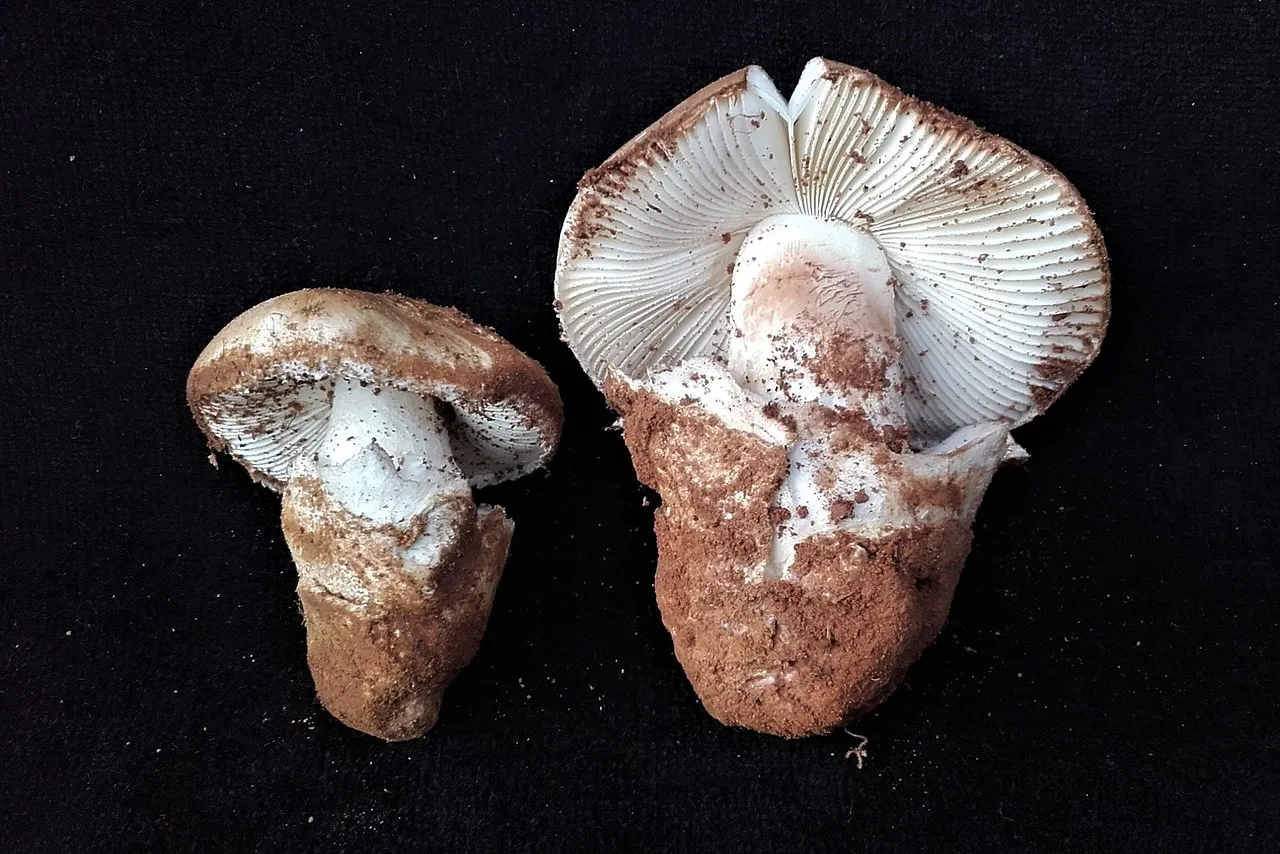
Amanita ponderosa (silarca) is a large, meaty edible mushroom endemic to the southwestern Iberian Peninsula. One of the most prized wild mushrooms in Portugal and Spain. It does not exist in Eastern Europe or most of Northern Europe — this is a purely Iberian species.
Described by French mycologists Malençon and R. Heim in 1944. The name ponderosa (Latin for “heavy, massive”) reflects the mushroom’s large size and dense flesh.
Cap
- Diameter: 8–20 cm (sometimes up to 25 cm)
- Shape: hemispherical when young, later convex to flat
- Colour: white to creamy-beige, sometimes with a slight pinkish tinge
- Surface: smooth, dry, may crack in dry weather
- Margin: even, without striations
Stem
- Height: 5–12 cm
- Width: 3–6 cm
- Colour: white
- Ring: white, well-developed, in the upper part of the stem
- Volva: sac-like, white, large — at the base of the stem
- Note: massive, dense, often deeply buried in soil
Flesh
- Colour: white; when scratched with a blade, turns pink or red — a key diagnostic feature absent in poisonous species
- Smell: intense, characteristic scent of wet earth — absent in the Death Cap
- Taste: mild, pleasant, reminiscent of porcini
Gills
- Colour: white, may become slightly creamy with age
- Attachment: free
- Spacing: crowded
Spore print
White.
Where and when
Season in Portugal
- Main season: February–April — a spring species (unlike most mushrooms!)
- Peak: March–April
- Fruits after winter and early spring rains
- When the rest of Portugal is “mushroom-sleeping” after winter, silarca is just starting its season
Habitats in Portugal
- Montado — under holm oak (Quercus ilex / Q. rotundifolia) — main habitat
- Cork oak groves — under cork oak (Quercus suber)
- Forms ectomycorrhiza with oaks
- Alentejo — primary region
- Prefers sandy, acidic soils, warm sunny locations
- Range: southwestern Iberian Peninsula + North Africa
Economic importance
Silarca is one of the most prized mushrooms of the region. Its gastronomic value is comparable to porcini. Actively collected by locals for personal consumption and sale to restaurants. The Silarca Festival has been held in Cabeça Gorda (Beja) since 2015.
Look-alikes
| Feature | Silarca (A. ponderosa) | Death Cap (A. phalloides) |
|---|---|---|
| Flesh when scratched | Turns pink/red | No colour change |
| Smell | Intense, wet earth | Faint or odourless |
| Cap | White to creamy | Greenish, olive, or white |
| Gills | White, may cream | Always white |
| Season | Spring (Feb–Apr) | Autumn (Sep–Nov) |
Three safety rules
- Pink test — scratch the flesh with a blade: silarca turns pink, Death Cap does not
- Wet earth smell — silarca has an intense, characteristic scent; Death Cap is odourless
- Never collect at the “egg” stage — at this stage it is impossible to distinguish from Death Cap
If even one feature raises doubt — do not take the mushroom.
Culinary use
Silarca is a delicacy of southern Portuguese and Spanish cuisine.
Preparation methods
- Frying — thick slices in olive oil with garlic and parsley
- Grilling — whole caps on charcoal
- With eggs — in scrambled eggs (migas alentejanas)
- Stewing — in ragout with meat and vegetables
Notes
- Dense, meaty texture — reminiscent of porcini
- Large specimens can weigh several hundred grams
- Best specimens are young, with firm, unopened caps
See Also
Habitats:
Related articles:
Image sources
- amanita-ponderosa.webp — Amanita ponderosa — edible mushroom of Portugal. Author: Cardoazul. License: CC BY-SA 4.0. Source
Sources
- Malençon & R. Heim — species description (1944)
- Index Fungorum — Amanita ponderosa (record #284068)
- Jardineriaon — Amanita ponderosa characteristics and identification
- BioDiversity4All / GBIF Portugal — species records
- Festival da Silarca — Cabeça Gorda, Beja
Disclaimer: Identifying mushrooms from descriptions and photographs on the internet is not a substitute for consulting an experienced mycologist. The authors assume no responsibility for the consequences of collecting and consuming mushrooms.
If this article was useful — help us write the next one.
☕ Support on Ko-fi